In the EU decision-making mechanism, local and regional authorities are represented by the European Committee of the Regions (CoR).
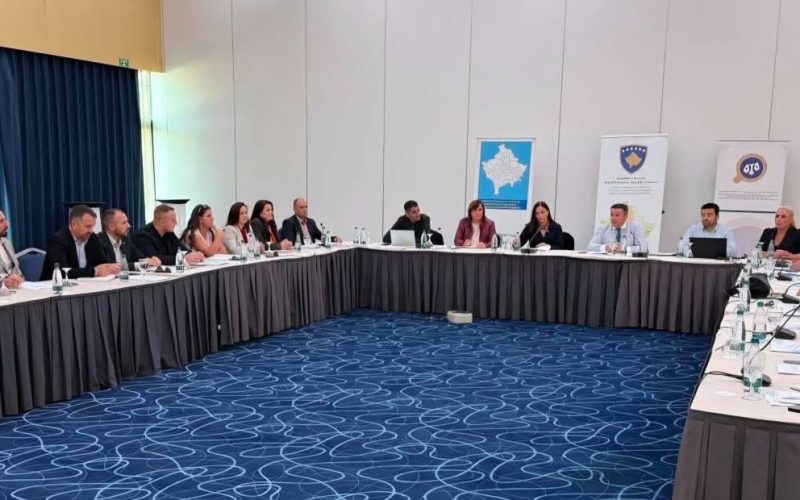
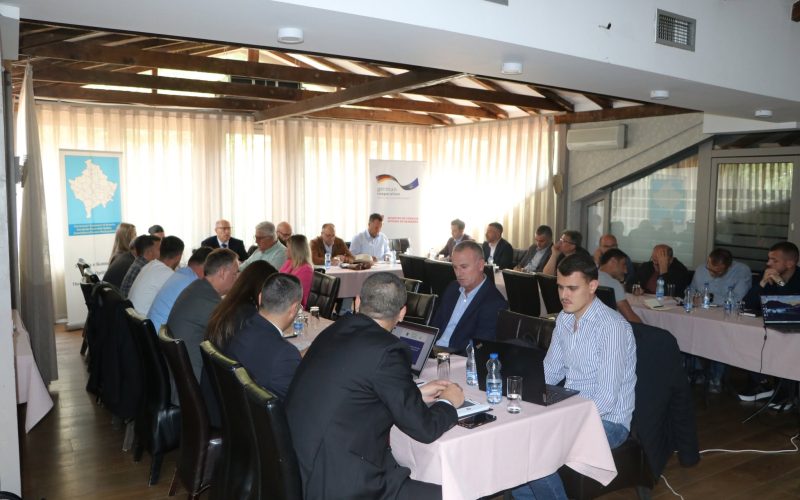
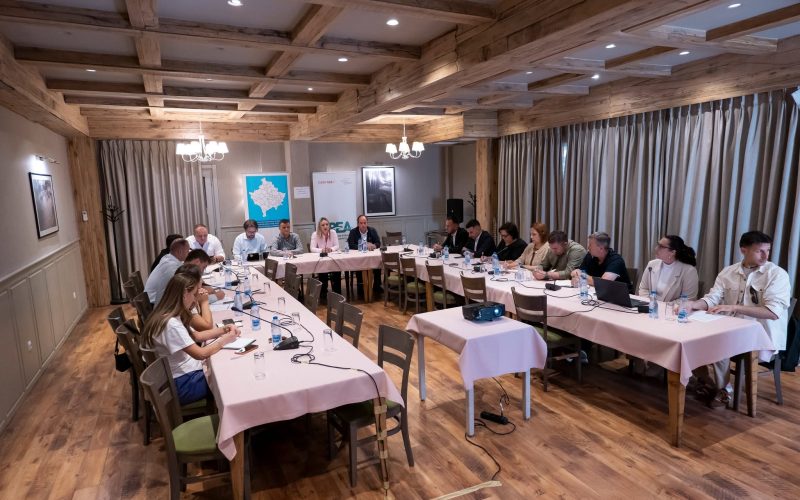
In April 2025, the CoR Bureau decided to strengthen relations by establishing a Working Group on Relations with Kosovo, which meets twice a year for political dialogue and the exchange of best practices — this time, in Prishtina.
Panelists at the meeting of the Working Group for Kosovo within the European Committee of the Regions included: Mr. Aivo Orav, Head of the European Union Office in Kosovo / EU Special Representative; Ms. Gillian Coughlan from ‘Renew Europe’; Mr. Përparim Rama, Mayor of Prishtina; Mr. Sazan Ibrahimi, Executive Director of the Association of Kosovo Municipalities (AKM); and Prof. Gazmend Qorraj, Jean Monnet Chair Holder at the University of Prishtina.
In his remarks, Mr. Sazan Ibrahimi stated, among other things: “This is an important moment for us because, for the first time, our municipalities have a structured and direct channel for dialogue with the European family of local and regional authorities. Therefore, the decision of the CoR Bureau in April 2025 to establish the Working Group for Kosovo was a major step forward.
For Kosovo, European integration is both an aspiration and a vision — but for our municipalities, it is also a practical obligation. We know that over 70% of European legislation is implemented at the local level. This means that the integration process is not only a matter for central institutions but also a path where municipalities must be involved from the very beginning.
The Association of Kosovo Municipalities represents the voice of the country’s 38 municipalities. For more than two decades, the AKM has been a reliable partner of local institutions, donors, and international organizations. However, we also face challenges such as the lack of financial and human resources, the increasing demands of citizens, the impact of migration, and the interaction between central and local levels — since central-level decision-making often does not take into account local realities and needs.
Municipalities are the bridge connecting citizens to the integration process. Without them, no reform can be implemented sustainably” – said among others Director Ibrahimi.
It is worth emphasizing that the successful implementation of around 70% of the existing EU legislation requires contributions from local authorities. However, the local level should not wait passively for its role after accession — it must be actively engaged and influence the EU accession process long before formal negotiations begin.
Local authorities must also possess the necessary skills and resources for this task. In the EU decision-making mechanism, local and regional authorities are represented by the European Committee of the Regions (CoR).
P.S. The translation into English and Serbian is automated with AI.